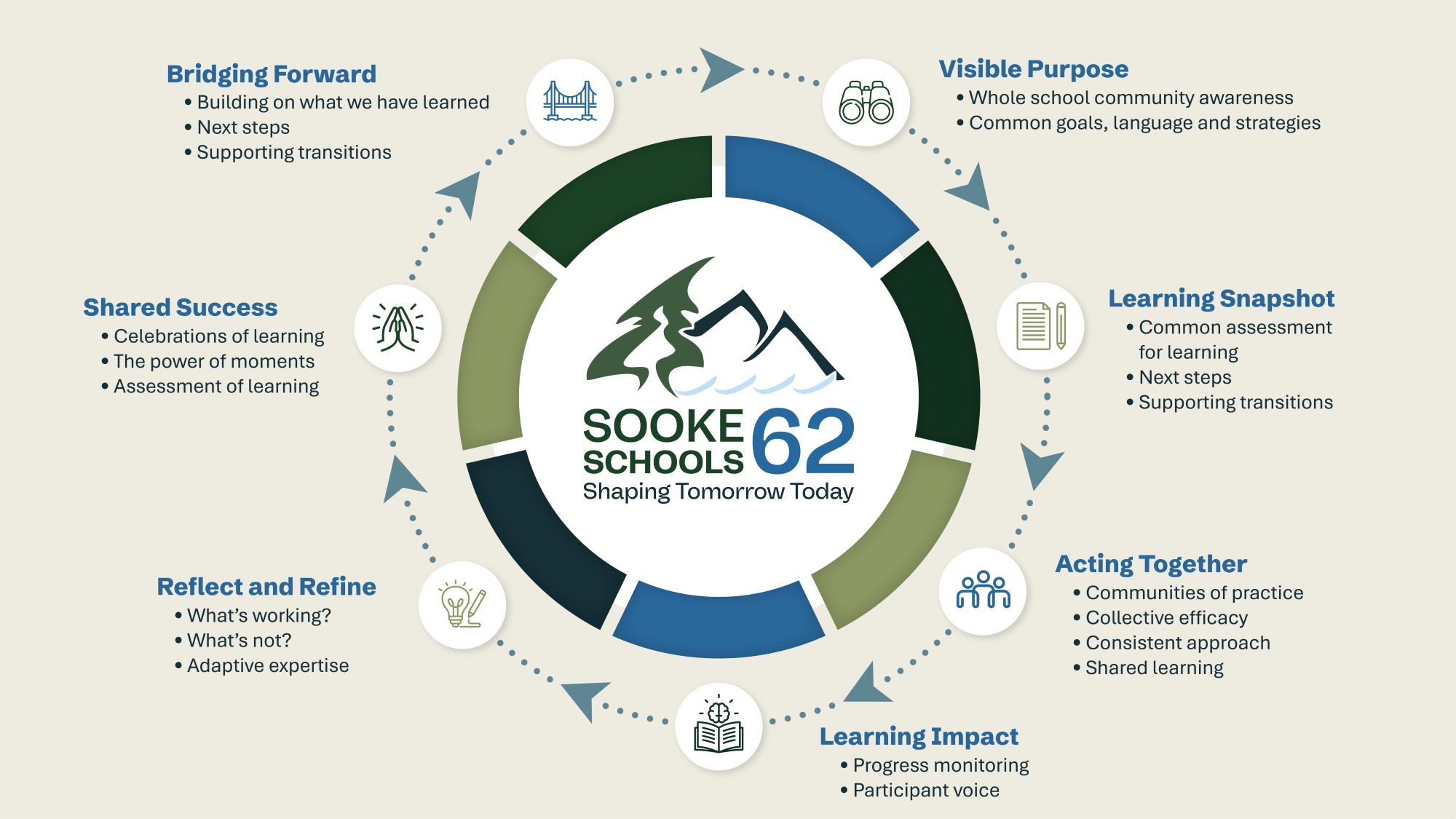
Continuous Improvement Framework
- This framework offers a clear, district-wide cycle for collaborative continuous improvement that can be understood and enacted by principals, teachers, and support staff.
- The seven phases: Visible Purpose, Learning Snapshot, Acting Together, Learning Impact, Reflect and Refine, Shared Success, and Bridging Forward create a practical pathway from shared understanding to action, reflection, and renewal.
- Each phase emphasizes both student and adult, learning and collaboration, helping schools align goals, strengthen instructional practice, and build coherence across classrooms, teams, and transitions.
- The elaborations are written in positive, accessible language to support school-based conversations, professional learning, and district-wide consistency.
- The framework signals a commitment to transparency, collective efficacy, and continuous growth in service of student success across Sooke School District 62.
How to Use This Document
This document can support district presentations, principal meetings, school planning conversations, and professional learning. The executive summary provides a concise District-level overview, while the elaboration pages offer fuller descriptions to guide implementation and shared understanding across schools.
To explore the framework: hover over any of the seven icons. Move your cursor into the popup to read or scroll through the information. The popup will remain open while your cursor is inside it.
Bridging Forward
Building on What We Have Learned
This means using insights from our work to inform future planning and decision-making. In schools, this is evidenced through the carrying forward of effective practices and refining areas for growth. It is continuous and forward-thinking. This matters because improvement is sustained when we build intentionally on what we know works.
Next Steps
Next steps at this stage refer to identifying future priorities based on reflection and learning. In practice, teams co-create plans that are responsive and achievable. It is focused and hopeful. This is important because clear direction maintains momentum and ensures ongoing progress.
Supporting Transitions
Supporting transitions emphasize continuity as we move into the next cycle of improvement. In schools, this includes sharing learning across teams and setting up structures for the next phase. It is connected and intentional. This matters because strong transitions ensure that learning is not lost but strengthened over time.
Visible Purpose
Whole School Community Awareness
This means that everyone connected to the school, including students, staff, families, and community partners, understands the purpose and direction of the school’s improvement work. In practice, this is clear, consistent messaging in classrooms, staff meetings, newsletters, and conversations with families. You might see goals posted in classrooms, referenced in assemblies, or embedded in school communications. This matters because when everyone understands the “why,” engagement deepens, and improvement becomes a shared journey rather than an isolated initiative.
Common Goals, Language, and Strategies
This reflects a shared understanding across the school about goals, language, instructional practice, and how we move forward together. In schools, this is demonstrated by teams using the same language when discussing student learning, aligning instructional strategies, and working toward clearly defined goals. It is cohesive and focused, reducing fragmentation. This is important because consistency strengthens the impacts of student success. Students benefit when adults are aligned in both language and practice.
Learning Snapshot
Common Assessment for Learning
This refers to the use of shared formative assessment practices to understand where students are in their learning. In classrooms, this includes common assessment tools, collaborative marking, and shared criteria for success. Assessment practices are connected to instruction and the curriculum, with staff learning alongside one another. This is important because it helps educators respond in real time to student needs and ensures that teaching is informed by the learning standards and responses are evidence-driven.
Next Steps
Next steps are the intentional actions taken based on what we learn from assessment. In schools, teachers are planning and adjusting instruction, providing instructional supports, or extending learning opportunities. Instruction is responsive and student-centred. This matters because meaningful improvement happens when we act on evidence rather than simply collecting it.
Supporting Transitions
This involves ensuring continuity of learning as students move between grades, programs, or schools. In practice, this includes sharing information, aligning expectations, and building relationships across transition points. It is intentional and collaborative. This is important because strong transitions help students feel known, supported, and ready to succeed in their next learning environment.
Acting Together
Communities of Practice
Communities of Practice are groups of educators who come together regularly to learn, reflect, and improve their practice. In schools, this is evidenced by collaborative team meetings focused on student learning, shared inquiry, and professional dialogue. The collaborative practice is collegial and purposeful. This matters because collective learning accelerates individual growth and strengthens our overall impact.
Collective Efficacy
Collective efficacy is the shared belief that together we can make a difference for every student. In schools, this is evident when teams take responsibility for all learners, work through challenges collaboratively, and celebrate progress together. Working together empowers and facilitates optimism about student success. This is important because when educators believe in their shared ability to improve outcomes, student achievement increases.
Consistent Approach
A consistent approach means that evidence-aligned instructional practices are implemented reliably across classrooms and schools while still allowing for professional judgment. In practice, this includes aligned instructional routines, shared expectations, or common frameworks. This matters because consistency supports equity, ensuring that all learners have access to high-quality learning experiences.
Shared Learning
Shared learning involves openly exchanging ideas, strategies, and successes across teams and schools. In practice, this is evident through staff sharing, cross-school collaboration, and shared professional learning opportunities. This is important because opportunities for collective learning, pedagogical exploration, and reflection foster shared knowledge and help ensure that effective practices are spread throughout the district.
Learning Impact
Common Assessment of Learning
This refers to shared summative assessments used to evaluate student learning against curriculum. In schools, this includes common tasks and proficiency assessments aligned to the reporting policy. Assessments practices are clear and transparent. This matters because these practices provide reliable information about student progress and support consistent expectations across classrooms.
Participant Voice
Participant voice means actively listening to and valuing the perspectives of students, staff, and families. In practice, this includes the use of surveys, focus groups, classroom discussions, and ongoing feedback opportunities. Engagement is respectful and inclusive. This is important because meaningful improvement is strengthened when those most impacted help shape the work.
Reflect and Refine
What’s Working? What’s Not?
This involves honest, evidence-based reflection on our practices and outcomes. In schools, this is evidenced by teams reviewing data, sharing insights, and identifying areas for growth. Discussions are safe and constructive to student success. This matters because continuous improvement depends on our willingness to reflect, celebrate success, and address challenges thoughtfully.
Adaptive Expertise
Adaptive expertise is the ability to respond flexibly and creatively to new challenges while drawing on strong professional knowledge. In practice, educators adjust approaches based on context, student needs, and emerging evidence. Actions to support success are flexible, informed, and responsive. This is important because schools are dynamic environments, and adaptability ensures we meet the needs of all learners.
Shared Success
Celebrations of Learning
This involves recognizing and celebrating student growth, staff learning, and collective achievements. In schools, this looks like showcases, assemblies, classroom celebrations, and sharing success stories. It is joyful and affirming. This matters because celebrating progress motivates continued effort and reinforces a culture of growth.
The Power of Moments
The power of moments refers to intentionally creating meaningful experiences that leave a lasting impact on students and staff. In practice, this includes memorable learning opportunities, recognition events, or moments of connection. These are inspiring and purposeful. This is important because these moments strengthen relationships, build belonging, and create lasting memories of success.
Assessment of Learning
Assessment of learning focuses on clearly understanding and communicating what students have achieved. In schools, assessments are aligned with instruction and the reporting policy. It is both affirming and transparent; recognizing student growth while maintaining clear expectations. This is important because excellence in assessment practices allows teachers to adjust and plan for further learning.