Problem Solving and Mathematical Thinking

Open Middle

Open Middle math problems, created by Robert Kaplinsky, are engaging tasks with a fixed start and single correct answer (closed beginning/end) but many paths to get there (open middle), promoting deep thinking, exploration, and rich classroom discussion.

Building Thinking Classrooms

BTC highlights key practices that shift classrooms from compliance to curiosity-driven, student-centred learning. It emphasizes inclusive, collaborative tasks that foster deeper engagement and a stronger sense of ownership over learning.

youcubed

youcubed is a small group of people working to get as many free and inspiring maths ideas out to teachers and learners as possible. These tasks and activities encourage students to think in different ways.

Teaching Through Problems Worth Solving

A collection of problems created for collaborative problem-solving including Thinking Classrooms. Originally created for the Alberta Grade 8 curriculum, it works well with BC's content and curricular competencies for grades 7-10.

NRICH

Nrich offers curriculum-linked resources for students aged 3-18, designed to nurture curious, resourceful and confident learners of school mathematics.

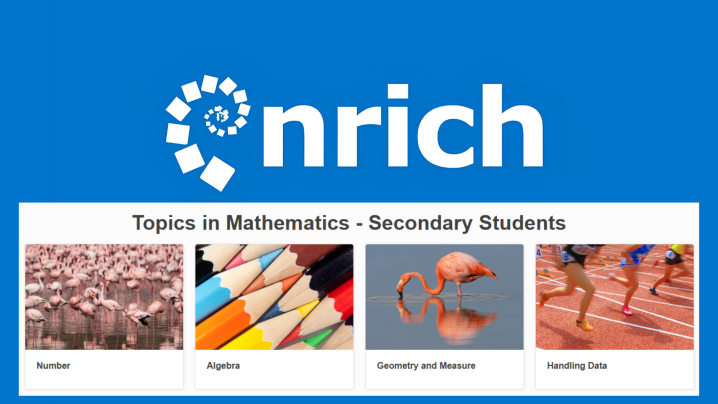
nrich - Topics in Mathematics

Successful mathematicians understand and use mathematical ideas and methods, solve problems, explain and justify their thinking, and have a positive attitude towards learning mathematics.

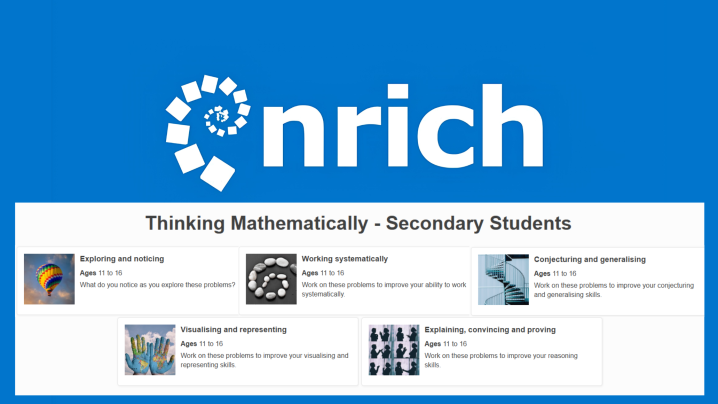
nrich - Thinking Mathematically

Exploring, questioning, working systematically, visualising, conjecturing, explaining, generalising, convincing, proving...are all at the heart of mathematical thinking. These activities are designed to give you the opportunity to think as a mathematician

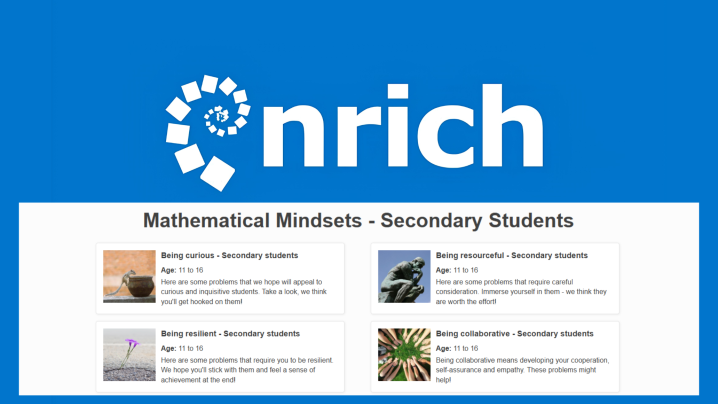
nrich - Mathematical Mindsets

Being curious, resourceful, resilient and collaborative are all valuable mathematical mindsets. We hope that the activities below will give you opportunities to develop these desirable characteristics.

Student Centered Mathematics

The site acts as a repository for educators looking to transition from traditional, lecture-heavy math instruction. It advocates for teaching practices where students take ownership of their learning through discovery, collaboration, and problem-solving.

Same But Different Math

The activity of same but different is an activity where two things are compared, calling attention to both how they are the same and how they are different. This apparent paradox is the beauty of the activity.